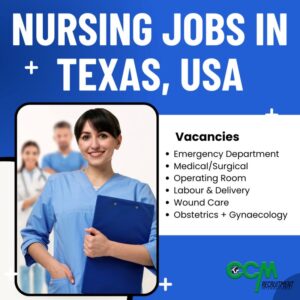
The healthcare industry in the United States continues to expand rapidly, making nursing one of the most stable and rewarding career choices available today. Nurses are the backbone of hospitals, clinics, rehabilitation centers, and healthcare organizations, providing essential patient care while working alongside physicians and specialists. As demand for qualified healthcare professionals increases, many nursing specialties now offer six-figure salaries, attractive benefits, flexible work schedules, and outstanding career advancement opportunities.
Nursing is no longer limited to bedside patient care. Modern nursing careers include advanced clinical practice, healthcare administration, education, research, anesthesia, emergency medicine, informatics, and leadership positions. These specialized roles require additional education and certifications but often provide significantly higher salaries and better work-life balance than traditional nursing positions.
One of the primary reasons nursing remains one of America’s most desirable careers is job security. Healthcare services are essential regardless of economic conditions, and an aging population continues to increase demand for skilled nurses across nearly every medical specialty. Hospitals, outpatient centers, private practices, government agencies, and telehealth companies actively recruit qualified nursing professionals, creating thousands of employment opportunities every year.
Among all nursing careers, the Certified Registered Nurse Anesthetist (CRNA) consistently ranks as one of the highest-paying positions. CRNAs administer anesthesia before surgeries and medical procedures while monitoring patients throughout treatment. Because this role requires advanced clinical expertise, graduate-level education, and national certification, salaries are among the highest in the nursing profession. Many experienced CRNAs earn well into six figures while enjoying strong employment demand nationwide.
Another highly rewarding specialty is the Nurse Practitioner (NP) role. Nurse Practitioners diagnose illnesses, prescribe medications in many states, develop treatment plans, and provide primary or specialized healthcare services. Depending on specialization and geographic location, Nurse Practitioners often receive excellent compensation while enjoying greater professional autonomy than registered nurses working in traditional clinical settings.
Clinical Nurse Specialists (CNS) represent another advanced nursing career with significant earning potential. These professionals specialize in areas such as cardiology, oncology, pediatrics, emergency care, or critical care. Clinical Nurse Specialists help improve patient outcomes by combining direct patient care with staff education, healthcare quality improvement, and evidence-based practice initiatives.
Healthcare organizations also offer lucrative opportunities for Nurse Managers and Nursing Directors responsible for supervising clinical teams, managing department budgets, improving operational efficiency, and ensuring compliance with healthcare regulations. Leadership positions typically require extensive nursing experience, strong management skills, and in many cases a Bachelor of Science in Nursing (BSN) or Master of Science in Nursing (MSN).
Travel nursing has become increasingly popular because it combines competitive salaries with the opportunity to work in different cities and states. Travel nurses accept temporary assignments at hospitals experiencing staffing shortages and often receive housing stipends, travel reimbursements, bonuses, and premium hourly wages. For professionals who enjoy flexibility and new experiences, travel nursing can be both financially and personally rewarding.
The educational path toward high-paying nursing careers generally begins with becoming a Registered Nurse (RN) through an Associate Degree in Nursing (ADN) or a Bachelor of Science in Nursing (BSN). Many employers increasingly prefer BSN graduates because they receive broader clinical training and leadership education. Nurses seeking advanced practice roles usually continue their education through MSN or Doctor of Nursing Practice (DNP) programs.

Professional certifications significantly improve earning potential within the nursing profession. Certifications demonstrate specialized knowledge and commitment to professional development while making candidates more competitive in today’s healthcare job market. Common certifications include Critical Care Registered Nurse (CCRN), Certified Emergency Nurse (CEN), Oncology Certified Nurse (OCN), Pediatric Nursing Certification (CPN), and Family Nurse Practitioner (FNP). Specialized credentials frequently lead to promotions and salary increases.
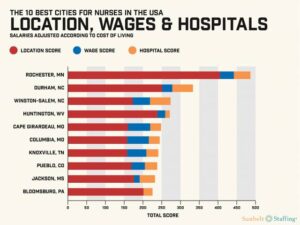
Salary varies based on several important factors, including education level, years of experience, specialty, employer type, geographic location, certifications, and shift schedules. Nurses working in metropolitan hospitals, specialty surgical centers, or high-demand regions often earn substantially more than those employed in smaller rural healthcare facilities. Overtime opportunities, night shifts, and weekend schedules may also increase annual earnings.
Technology is rapidly transforming healthcare, creating new career opportunities in nursing informatics, telehealth, electronic medical records, artificial intelligence, and digital healthcare systems. Nursing Informatics Specialists combine clinical expertise with information technology to improve healthcare delivery, patient safety, and data management. As hospitals continue investing in digital transformation, demand for technology-focused nursing professionals continues to grow.
One of the greatest advantages of nursing is the wide range of career advancement opportunities available throughout a professional’s lifetime. A Registered Nurse may begin working in direct patient care, later specialize in intensive care, become a Nurse Practitioner, move into hospital administration, teach future nurses at universities, or transition into healthcare consulting. This flexibility allows professionals to continuously expand their skills while increasing earning potential.
Strong interpersonal communication remains one of the most valuable skills in nursing. Successful nurses communicate effectively with patients, physicians, therapists, pharmacists, administrators, and family members while remaining calm under pressure. Compassion, critical thinking, problem-solving abilities, and emotional resilience are equally important because nurses frequently care for patients during stressful and life-changing situations.

Healthcare employers increasingly offer competitive benefits packages to attract and retain qualified nursing professionals. Besides attractive salaries, many organizations provide health insurance, retirement plans, tuition reimbursement, continuing education support, paid time off, sign-on bonuses, relocation assistance, flexible scheduling, and student loan repayment programs. These benefits significantly increase the overall value of a nursing career beyond base salary alone.
The future outlook for nursing in the United States remains exceptionally strong. Population growth, increased life expectancy, chronic disease management, and ongoing healthcare expansion continue driving demand for skilled nursing professionals across nearly every specialty. Government workforce projections consistently identify registered nursing and advanced practice nursing among the fastest-growing healthcare occupations for the coming decade.
For students considering healthcare careers, nursing offers an excellent combination of financial stability, professional fulfillment, career flexibility, and long-term job security. Whether pursuing a career as a Registered Nurse, Nurse Practitioner, Certified Registered Nurse Anesthetist, Clinical Nurse Specialist, or Nursing Administrator, investing in quality education and specialized certifications can open doors to rewarding positions with excellent compensation and advancement opportunities.
Choosing one of the highest-paying nursing jobs in the USA requires careful planning, continuous learning, and dedication to patient care. By obtaining advanced degrees, earning respected certifications, developing leadership skills, and selecting high-demand specialties, nursing professionals can build rewarding careers that provide both personal satisfaction and outstanding financial rewards. As healthcare continues to evolve, qualified nurses will remain among the most respected, essential, and well-compensated professionals in the American workforce.